
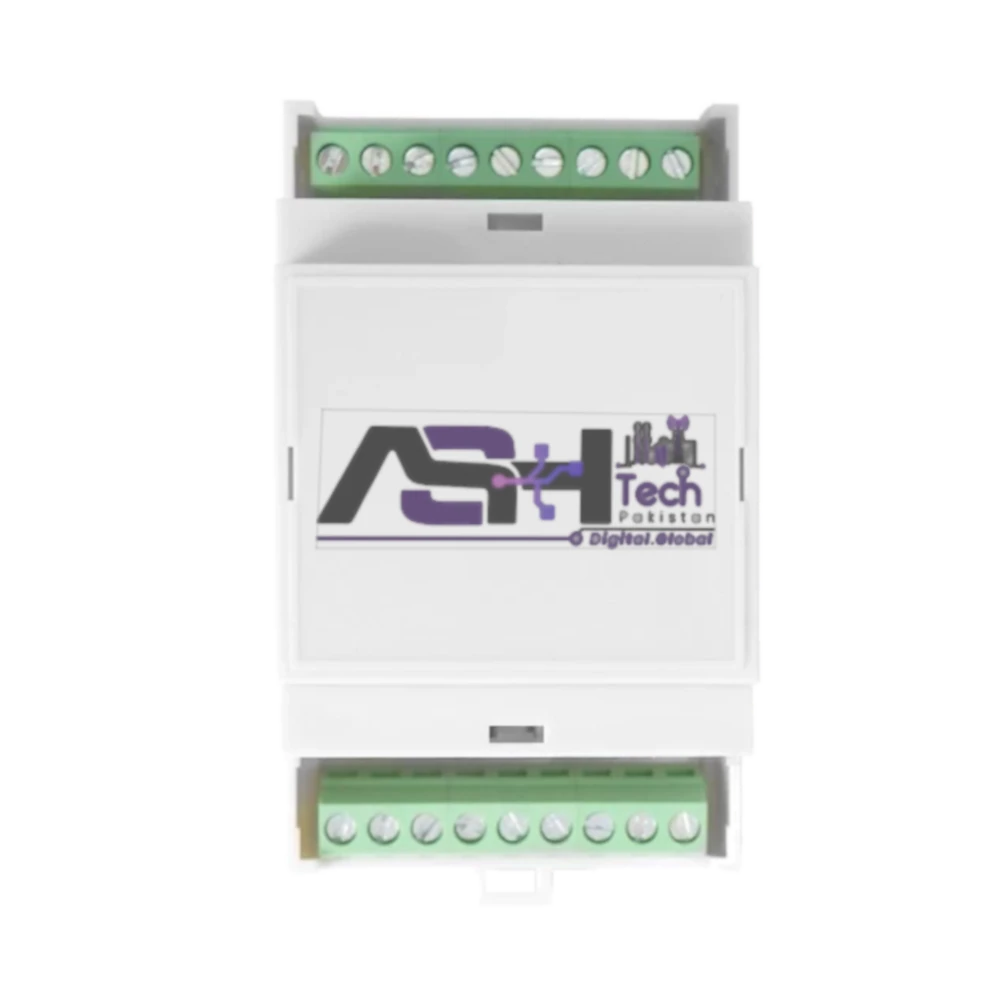
ASHTech’s Industrial IoT Gateway offers real-time monitoring, smart control, and seamless integration for modern industrial systems. Designed for factories, utilities, and remote assets, it combines powerful protocol translation with cloud connectivity via WiFi, Ethernet, and 4G.
Direct sensor integration (Analog, Digital, Modbus, etc.)
Usually relies on PLCs or RTUs
Often requires intermediary controllers
Built-in support for multiple protocols (Modbus, MQTT, HTTP, etc.)
Limited or requires additional modules
Supports some industrial protocols, limited flexibility
Local + cloud logging with long-term storage and trend retention
Extensive local logging
Primarily cloud-based with minimal local storage
Built-in Grafana-based dashboard (real-time, customizable)
Rich visualization but proprietary
Basic dashboards, limited customization
Web-based access via WiFi, Ethernet, or 4G; secure remote control
Possible with VPNs or leased lines
Cloud-based remote access
Near real-time with alerts and local edge processing
Full real-time monitoring
Dependent on cloud communication latency
Supports on-device logic, automation, alerts
Usually offloaded to PLCs or controllers
Varies by vendor
Cloud-native, but also deployable in local/offline environments
Centralized, with limited portability
Flexible remote deployment
Native support for WiFi, Ethernet, 4G
Typically Ethernet/RS485; wireless support varies
Typically WiFi, LTE, LoRa/Zigbee optional
SSL, user authentication, OTA updates, encryption, cloud firewalls
Often lacks modern security unless recently upgraded
Basic; often depends on the user to configure
OTA updates for firmware, dashboard, and configs
Requires manual updates, often on-premise
Some OTA support; limited consistency
Subscription-based model; cost-effective for SMEs and industrial edge users
High upfront and ongoing maintenance/licensing costs
Mid-range; some with hidden/cloud costs
Cloud-native with built-in support for AWS, Azure, private cloud
Requires separate integration modules
Designed for cloud-first deployments
Fully operational in local-only environments
Designed for on-site use
Often limited or requires cloud sync
Remote monitoring, smart factories, legacy modernization, hybrid SCADA
Centralized, high-complexity industrial systems
IoT/cloud-focused deployments, less industrial control
Open architecture with APIs, custom dashboards, plugin support
Proprietary ecosystems limit extensibility
Some extensibility, depends on vendor


